
Cone Penetration Testing
ASTM D5778-20GID’s primary method for continuous, high-resolution ground characterization with real-time pore-water pressure measurement delivers the data foundation designers rely on.
What Is CPTu?
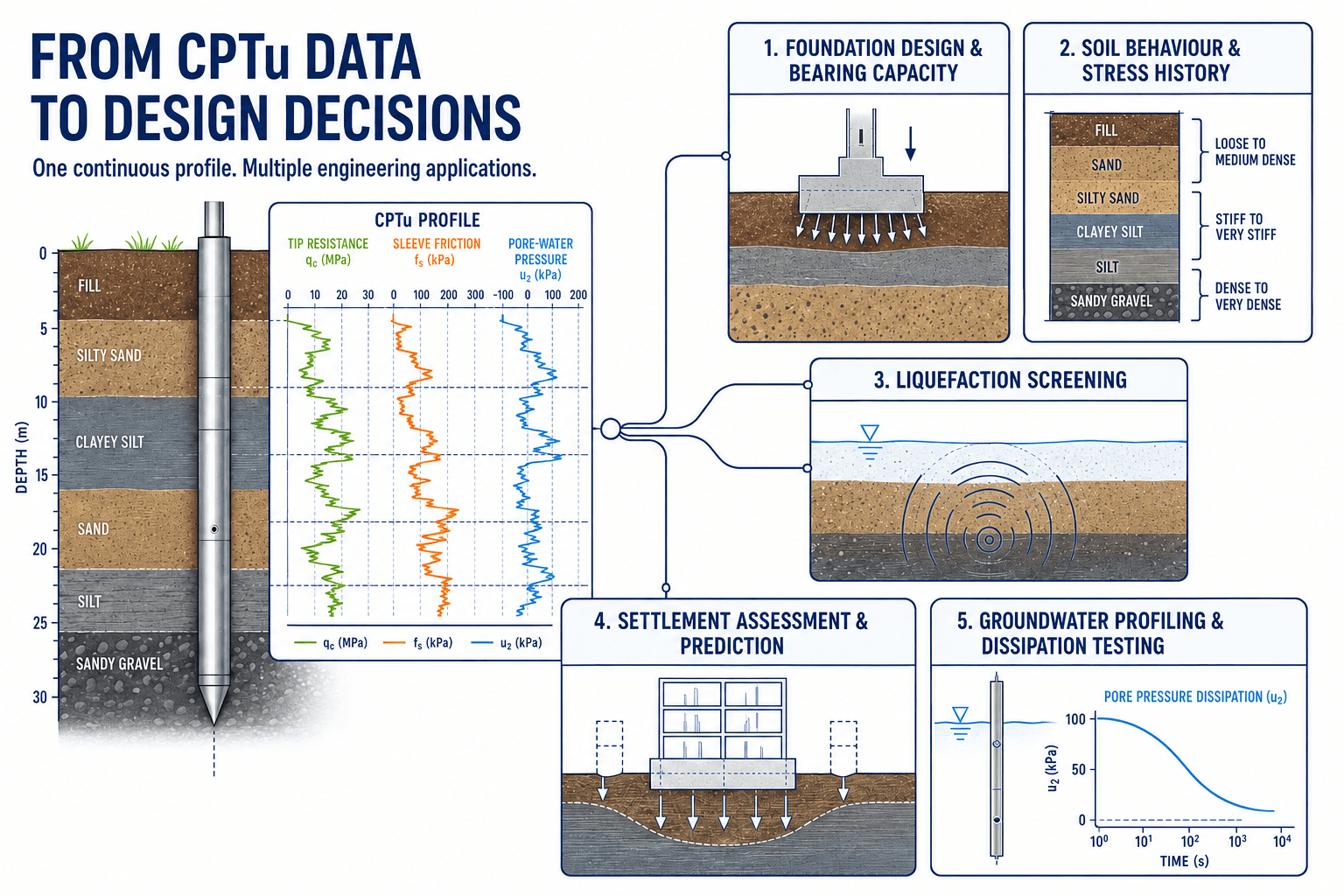
Cone Penetration Testing (CPTu) is performed by advancing an instrumented cone into the ground at a controlled rate of 2 cm/s. Rather than relying on isolated samples, integrated sensors continuously measure tip resistance, sleeve friction and pore-water pressure as the cone advances, producing a detailed record of changing ground conditions with a vertical resolution of approximately 1 cm, without the disturbance or interpretive gaps associated with sample-based investigation.
Applications
- Foundation design and bearing capacity assessment
- Soil behaviour, classification and stress history evaluation
- Liquefaction susceptibility screening
- Settlement assessment and prediction
- Groundwater profiling and pore-pressure dissipation testing
Our CPT Advantage
Real-time pore-water pressure measurement on every sounding, not an optional add-on.
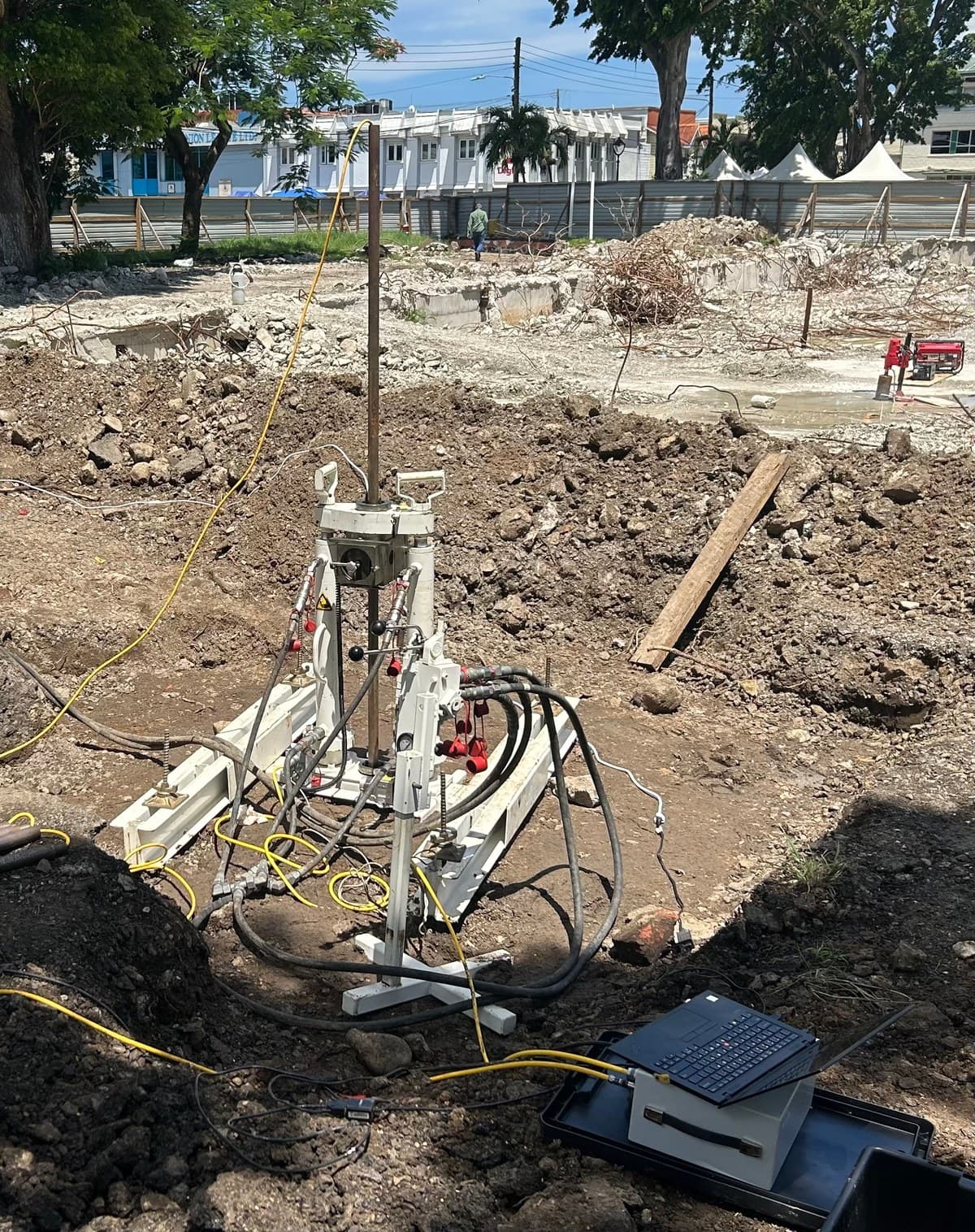
Track-mounted and modular rigs capable of testing along slopes, within trenches and other locations where site access is restricted.
Reaction force may be derived from both soil and concrete anchors to allow for testing on basements, runway and road pavements and natural/made ground.
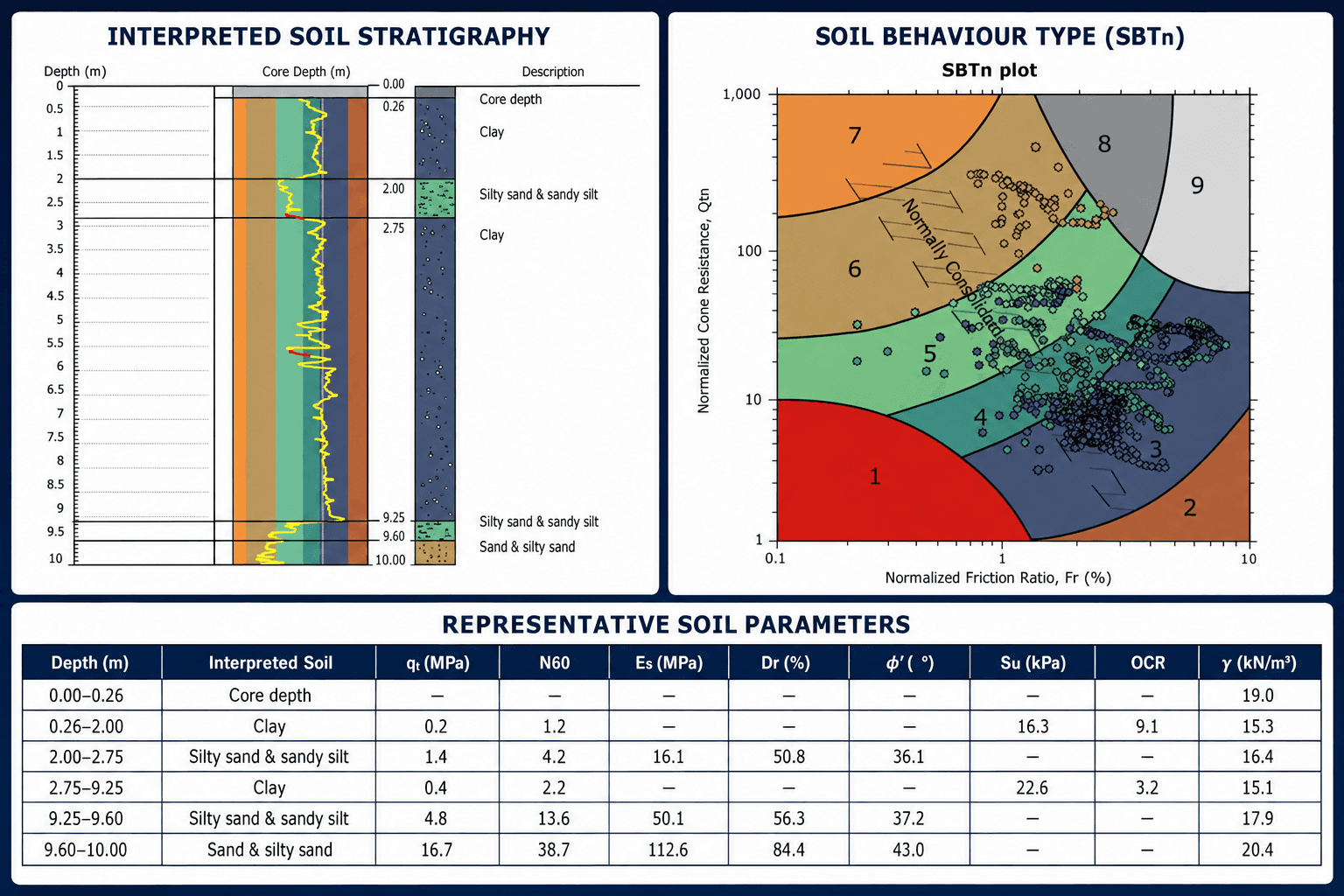
Actionable engineering recommendations, not just raw data.
Deliverables
Case Study Spotlight
Saint Lucia · Government · CPT + DPSH
Saint Lucia Halls of Justice
CPT through an obstructed demolition site and an existing reinforced concrete slab where large rounded boulders repeatedly prevented rig anchoring; GID cored through the slab and grout-set threaded rod anchors to achieve reaction force.
View Full Case Study →Frequently Asked Questions
Request a CPT Quote
Tell us about your site and we'll recommend the most appropriate investigation approach.