
Dynamic Probing Super Heavy
ISO 22476-2:2005The practical complement to CPT on obstructed sites, offering fast, continuous penetration resistance profiling without pre-boring.
What Is DPSH?
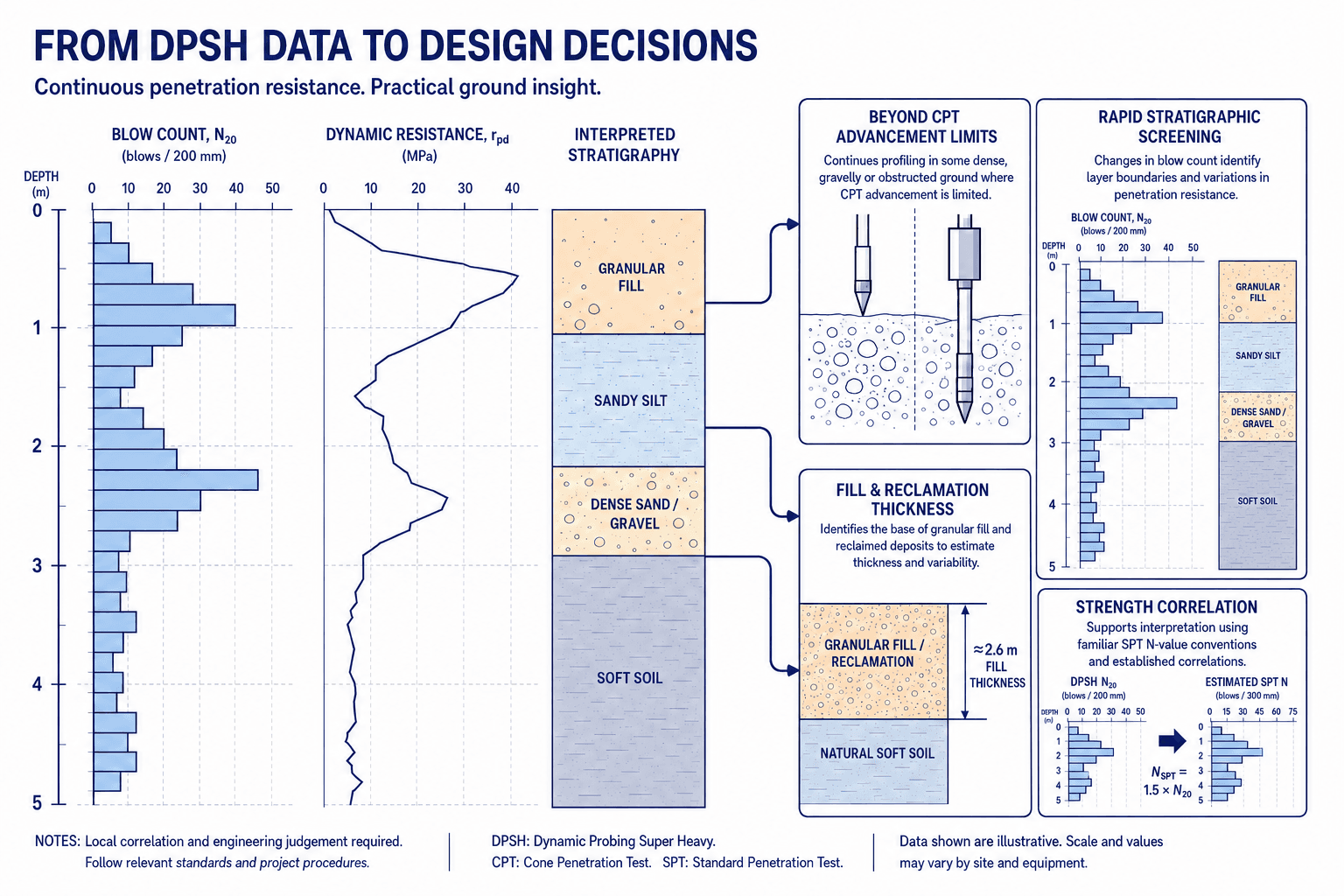
Dynamic Probing Super Heavy (DPSH) is performed by driving a hardened steel conical tip into the ground using a standardized 63.5 kg hammer falling through 0.76 m. As the cone advances, the number of hammer blows required to penetrate each fixed depth interval is recorded, producing a continuous record of penetration resistance with depth.
Understanding DPSH Resistance
The recorded blow count reflects the resistance encountered by the cone as it advances through the ground. Higher blow counts indicate denser or harder materials, while lower counts are associated with softer or looser ground. Changes in resistance with depth typically indicate transitions between different ground conditions, which when interpreted alongside site geology and other investigation data, provides valuable insight into subsurface variability.
How Does It Compare with SPT?
DPSH uses the same fundamental principle as the Standard Penetration Test (SPT): a standardised hammer drives a penetration tool into the ground, with resistance measured by the number of blows required for a specified penetration. The key difference is that DPSH measures this resistance continuously with depth, rather than at discrete test intervals. This provides a much more detailed profile of changing ground conditions and reduces the likelihood of significant layers being missed between test depths. Where soil samples are required, the continuous DPSH profile can also be used to target sampling at selected depths, allowing laboratory testing to focus on the materials most relevant to the engineering assessment.
Applications
- Sites where dense, gravelly, or obstructed ground prevents CPT advancement
- Rapid stratigraphic screening
- Granular fill and reclamation thickness assessment
- Strength correlation for engineers working with familiar SPT N-value conventions
Why DPSH
Delivers reliable subsurface information with minimal site preparation.
Testing begins directly from the ground surface, reducing time and cost.
Allows for the recovery of disturbed and undisturbed samples for laboratory classification and strength testing.
Results are interpreted in the context of site geology and project requirements to support informed engineering decisions.
Unlike SPT, DPSH provides a continuous penetration-resistance profile, reducing gaps between discrete test depths.
Standardized hammer energy and cone geometry provide consistent resistance measurements for comparison across investigation locations.
Deliverables
Case Study Spotlight
Saint Lucia · Government · DPSH + MASW
Invest Saint Lucia Headquarters, Pointe Seraphine
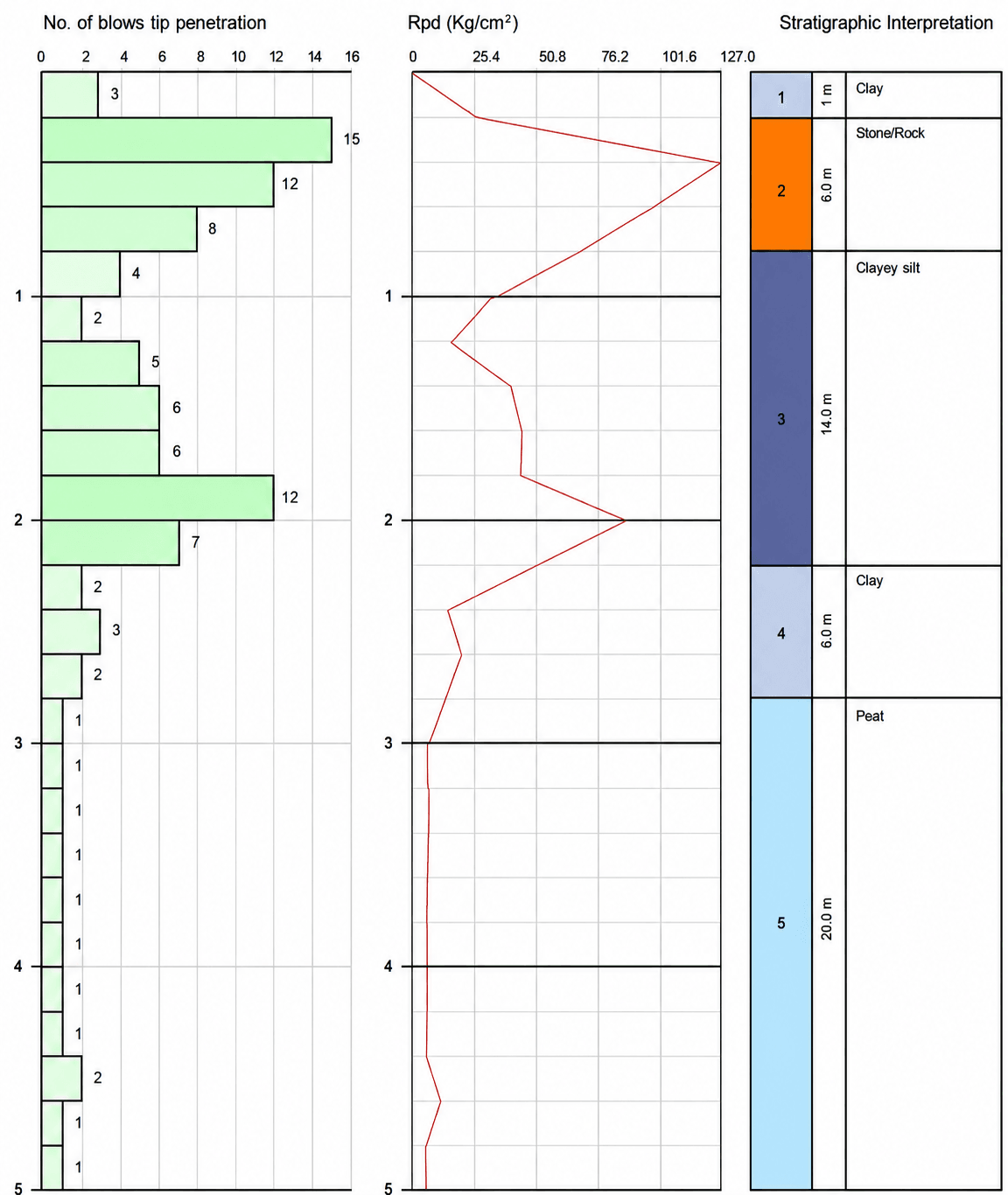
DPSH soundings reaching over 20 m through reclaimed waterfront fill, establishing fill thickness and penetration resistance across the taxi-stand platform adjoining the proposed headquarters building.
View Full Case Study →