
Multi-channel Analysis of Seismic Waves (MASW)
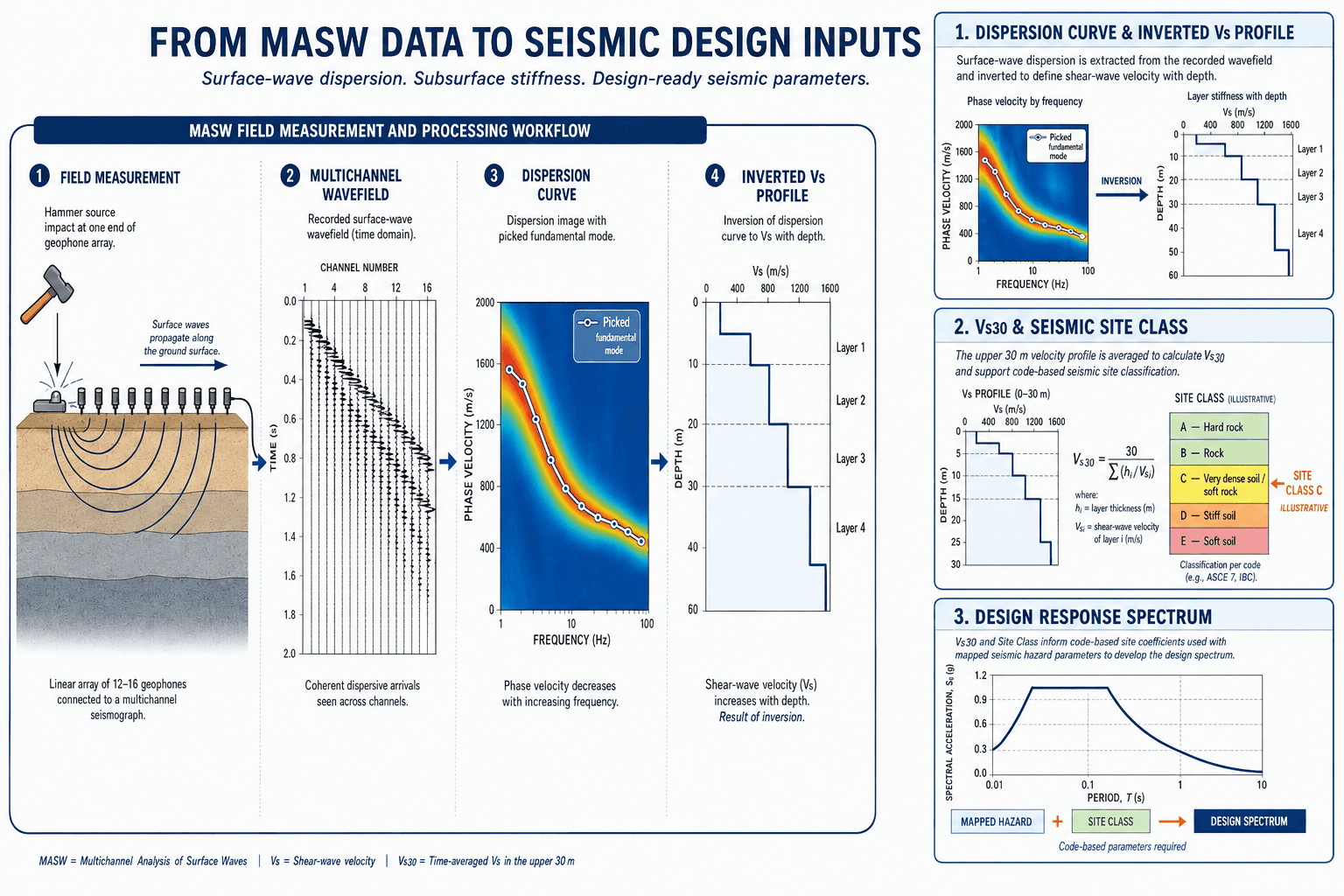
ASCE 7-16 / IBC 1613.1Determine your site’s Seismic Site Class without drilling or excavation using MASW, one of the most critical inputs for earthquake-resistant structural design.
What Is MASW?
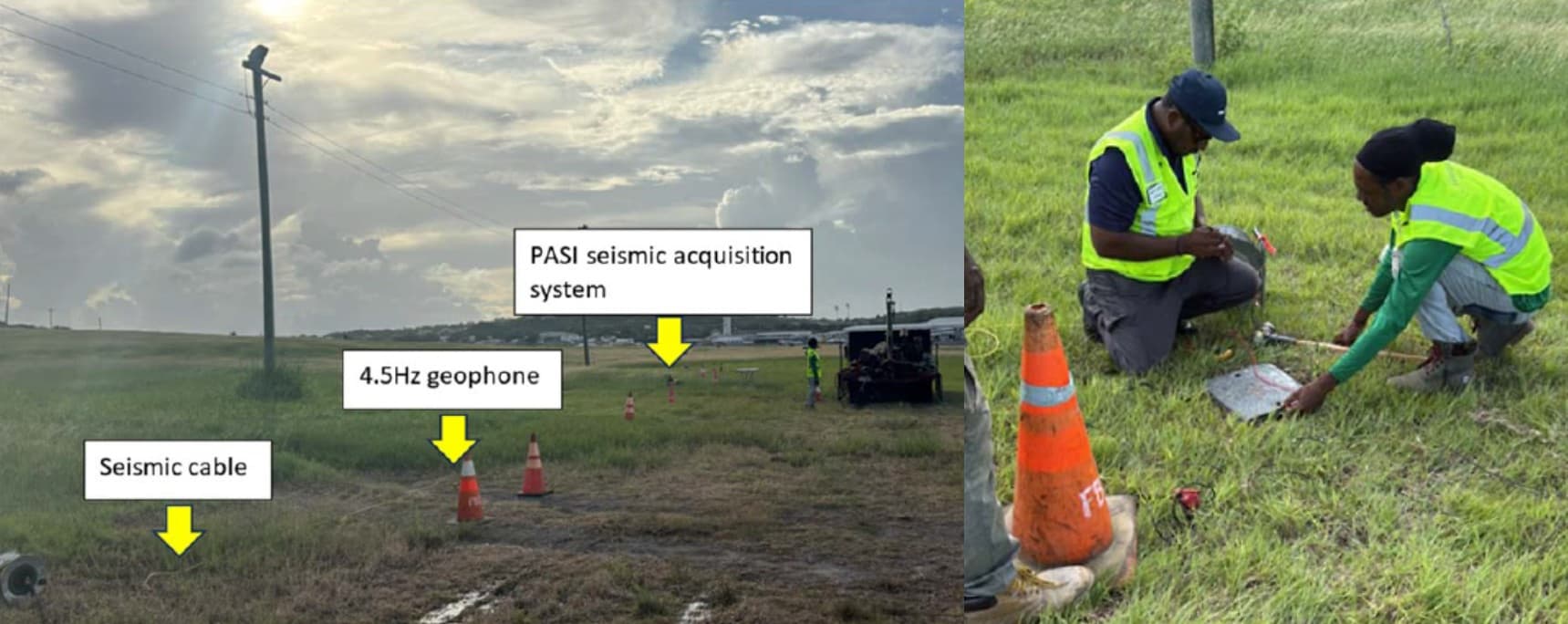
Multichannel Analysis of Surface Waves (MASW) is a non-intrusive geophysical method that uses a 24-channel PASI seismic acquisition system and 24 vertical 4.5 Hz geophones deployed along a survey line. An impact source generates surface waves, and analysis of their dispersion produces a layered shear-wave velocity (Vs) profile with depth, all without drilling or excavation.
Seismic Site Classification
The measured shear-wave velocity profile is used to calculate Vs30, the time-averaged shear-wave velocity in the upper 30 m of the ground. Under ASCE 7-16 and IBC 1613.1, Vs30 forms the basis for Seismic Site Classification, which directly influences the design response spectrum and the seismic forces a structure must be designed to resist.
Applications
Why MASW
Site-specific seismic characterization can reduce unnecessary conservatism where ground conditions justify it.
No drilling or excavation is required, minimizing site disruption and investigation costs.
Provides the measured ground data engineers need to make confident, code-compliant seismic design decisions.
Deliverables
Case Study Spotlight
Antigua · Aviation · Rock Coring + MASW
Signature Aviation FBO, Antigua
MASW combined with rock coring and laboratory testing at a live international airport, establishing seismic site class and rock mass strength parameters for the new FBO terminal footprint.
View Full Case Study →