
Pile Integrity Testing
Non-destructive verification of cast-in-situ pile integrity during construction identifies structural defects before loading or project handover.
What Is PIT?
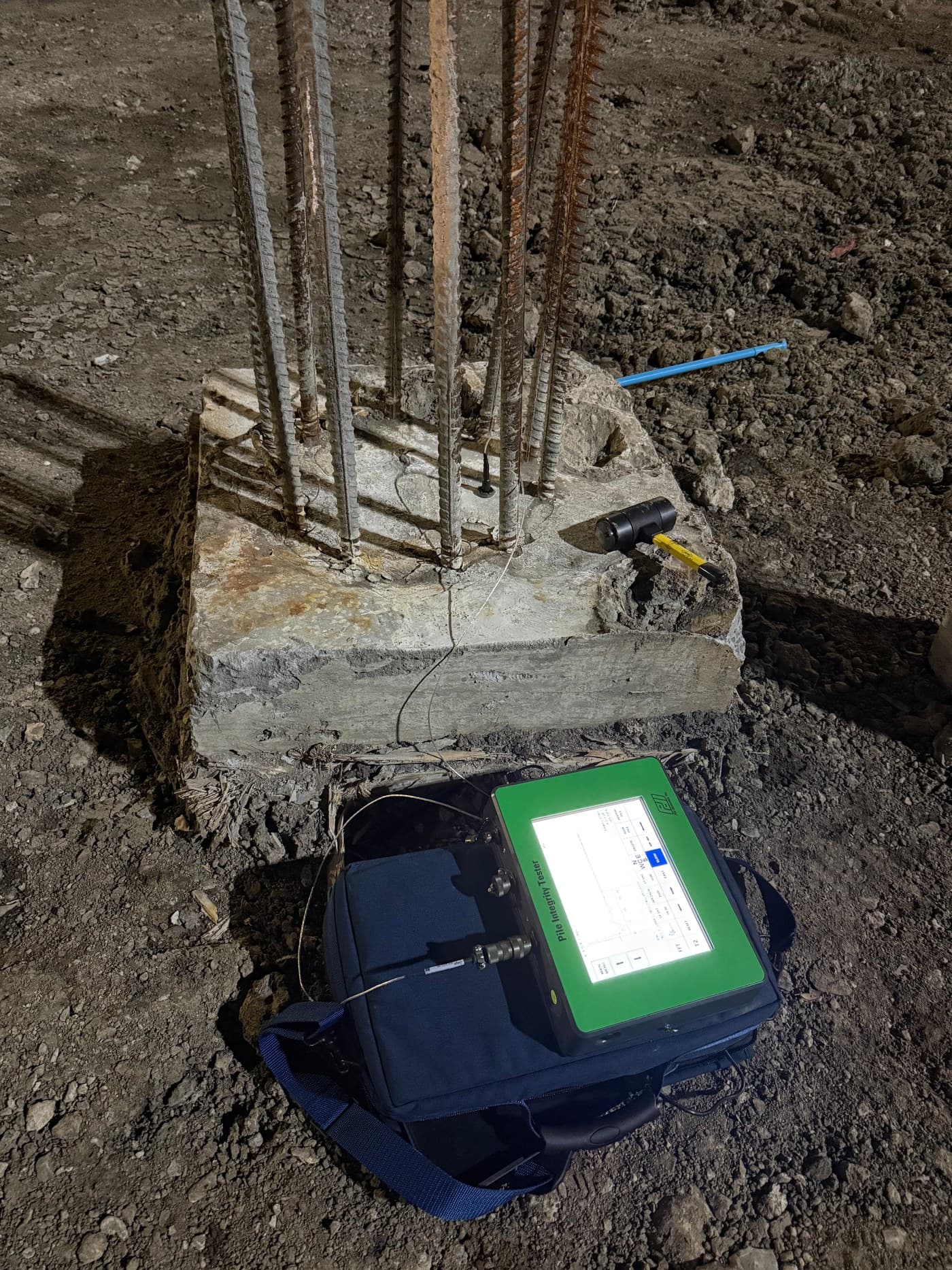
Pile Integrity Testing (PIT) is a non-destructive method used to assess the integrity of cast-in-situ concrete piles. A controlled hammer impact at the pile head generates a low-strain stress wave that travels along the pile shaft. The resulting response is recorded by an accelerometer at the pile head and analysed to evaluate pile continuity and identify anomalous changes within the shaft.
Understanding PIT Reflections
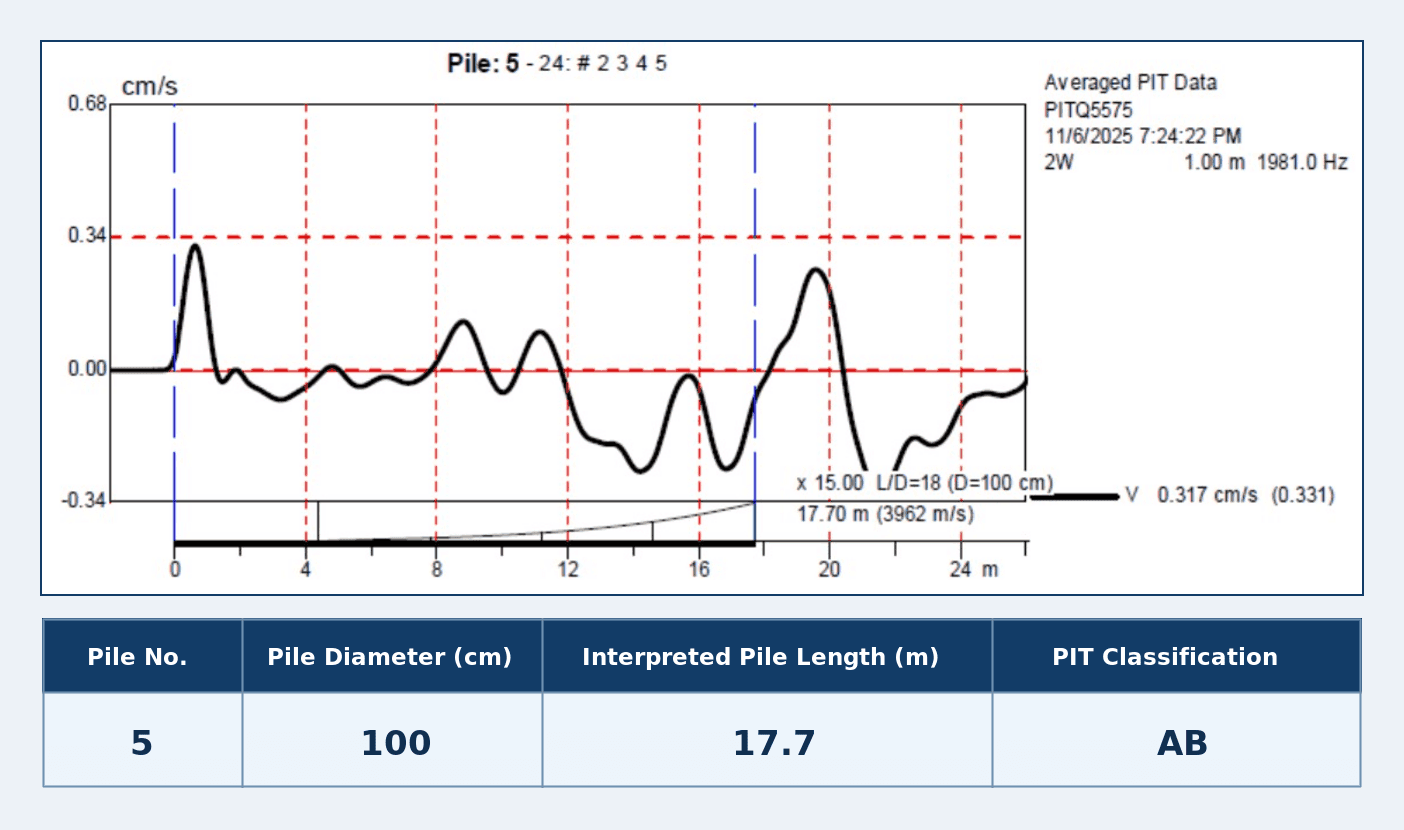
The stress wave reflects each time it encounters a change in the pile’s cross-section, concrete quality or an embedded defect. A reflection arriving at the expected toe depth, with the expected polarity, indicates a continuous pile. Reflections arriving earlier than expected suggest a discontinuity above the toe, such as necking, a void or a change in concrete quality, with arrival time indicating its approximate depth and amplitude indicating its severity. When interpreted alongside construction records and site conditions, the reflection trace provides a reliable basis for assessing pile integrity.
Applications
Verify the integrity of cast-in-situ piles as part of the contractor’s or client’s quality assurance programme.
Confirm pile integrity before structural loading or project handover.
Identify and assess suspected pile defects to support remediation planning and engineering decisions.
Provide objective technical evidence for contractor QA reviews, claims and defect-related disputes.
Why PIT
Identify pile defects before structural loading or project handover.
Support confident pile acceptance, remediation or further investigation.
Minimize costly rework, delays and construction uncertainty.
PIT results are interpreted alongside GID’s original ground investigation for more informed engineering decisions.
Deliverables