
GID Services Inc.: Integrated Ground Investigation in Saint Lucia & the Eastern Caribbean
Investigation Methodology
Two data streams. One ground model.
Intrusive and non-intrusive methods provide complementary insights. By integrating both, GID develops a more comprehensive ground model than either approach can achieve alone, supporting more informed and confident design decisions.
Intrusive
CPT & DPSH
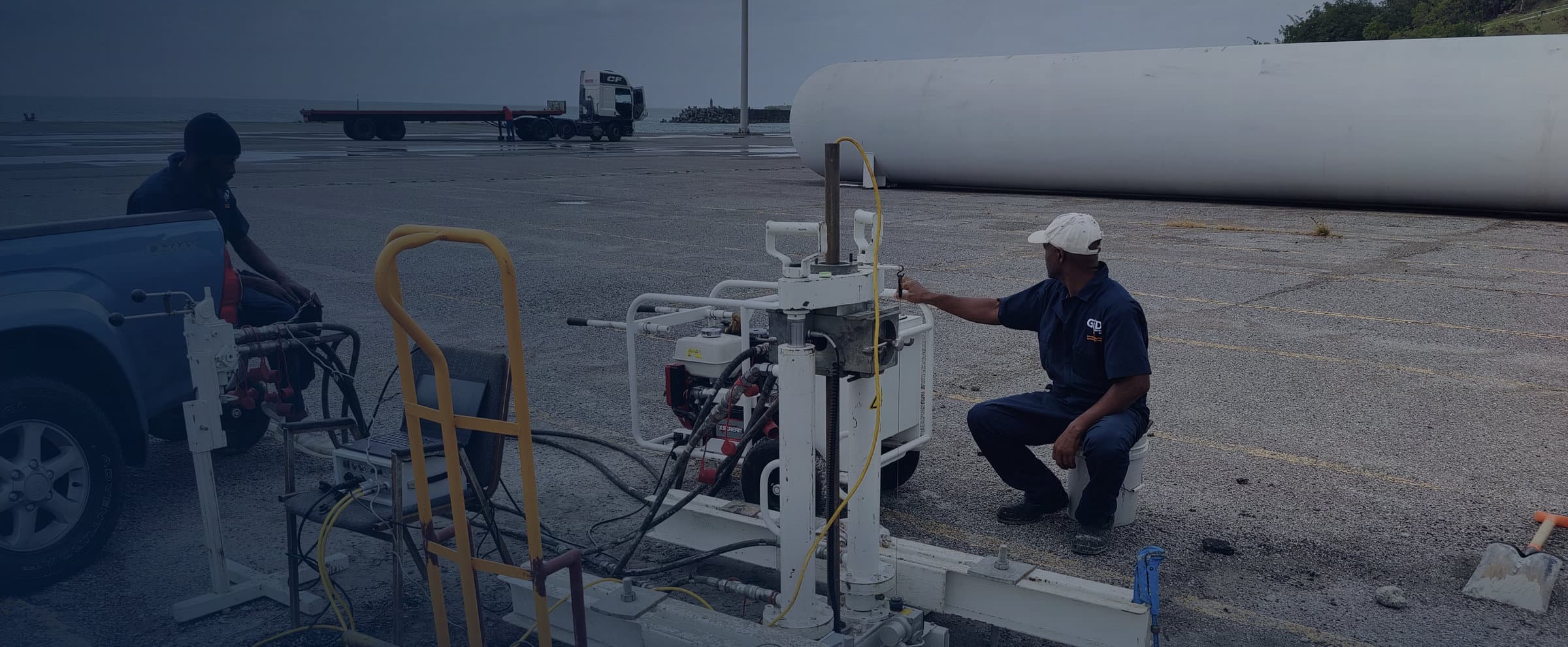
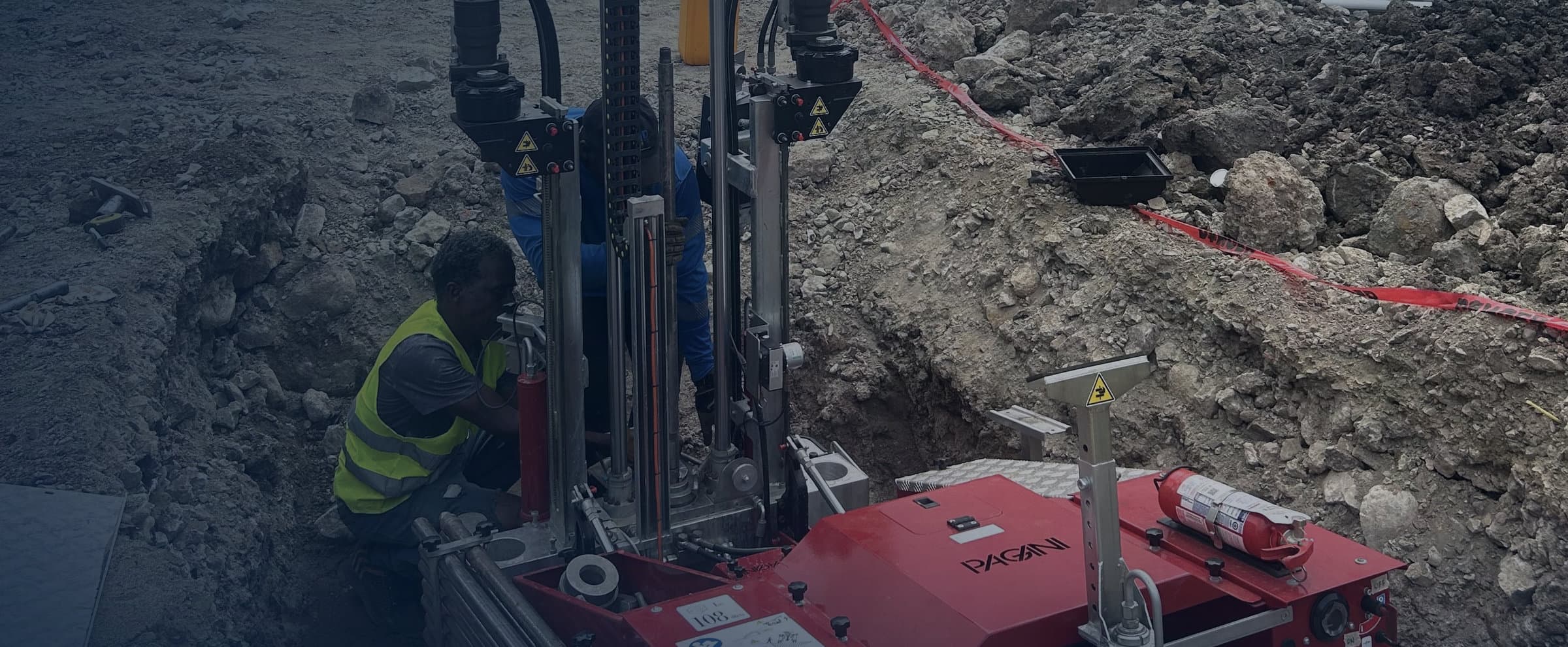
CPT and DPSH advance probes into the ground to evaluate soil conditions with depth. CPT provides continuous, high-resolution measurements of soil resistance, friction and pore pressure, while DPSH records resistance from the number of hammer blows required to achieve a set penetration. Together, they help define soil stratigraphy, strength variation and changes in ground conditions.
- ›CPT tip resistance (qc), soil strength and stratigraphy
- ›CPT sleeve friction (fs), soil behaviour and classification
- ›CPTu pore pressure (u₂), groundwater and drainage response
- ›DPSH blow count (N₂₀), penetration resistance and strength variation
- ›DPSH penetration, investigation of dense or coarse strata that may cause CPT refusal
Non-Intrusive
MASW
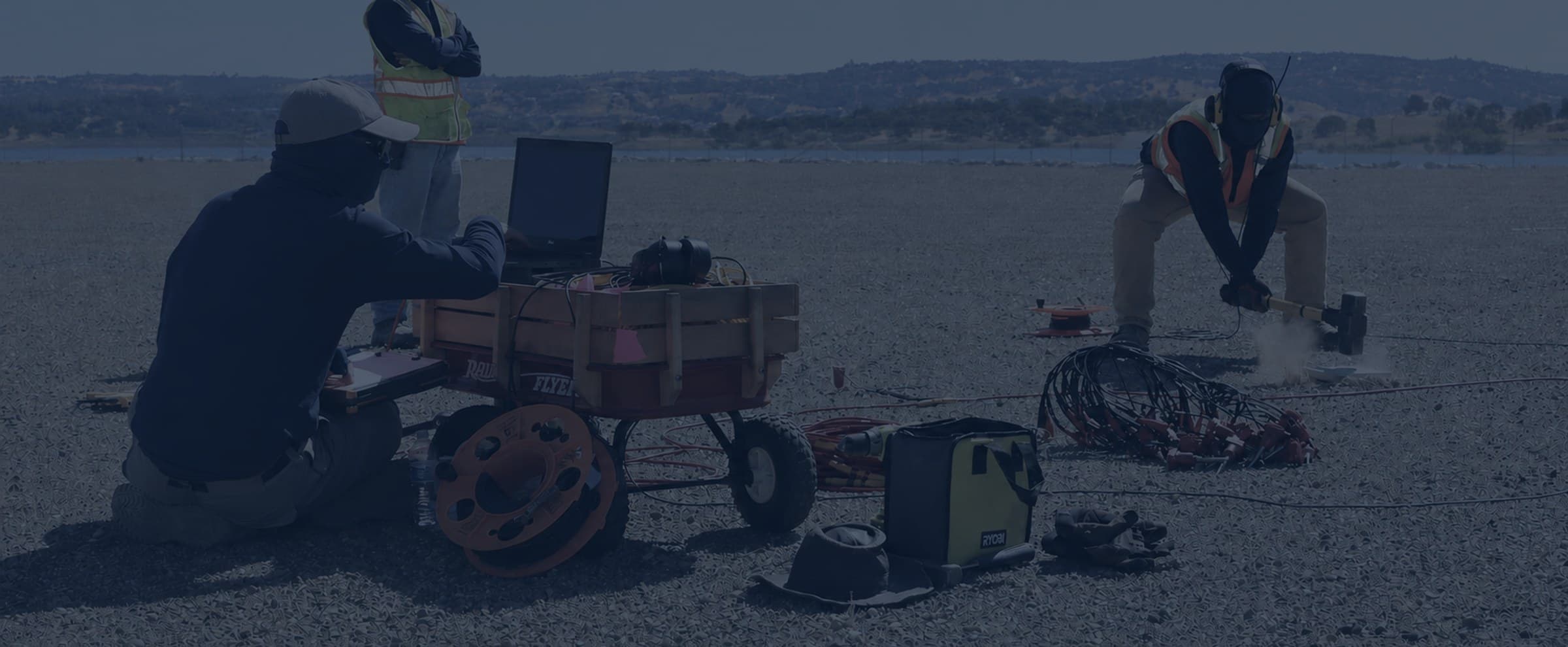
MASW uses an array of surface geophones to measure the propagation of seismic surface waves and develop a shear-wave velocity (Vs) profile with depth, without drilling or disturbing the ground. The results indicate changes in subsurface stiffness and support seismic site characterization and earthquake-resistant design.
- ›Shear-wave velocity (Vs), ground stiffness with depth
- ›Velocity contrasts, changes in subsurface layers
- ›Vs30, average shear-wave velocity within the upper 30 m
- ›Seismic Site Class, classification in accordance with the applicable ASCE 7 standard
- ›Seismic design parameters, input for developing the design response spectrum
Combined Output
Integrated Ground Model
Strength and stiffness from intrusive testing, cross-validated against shear-wave velocity from MASW, a single internally consistent ground model for foundation design, seismic assessment, and engineering recommendations.
See How Each Method Contributes →Our Services
Several specialist services. One in-house team.
Our Process
From Data to Design
Field data collected using CPT, DPSH, MASW, or combined methods.
Soil behaviour type, seismic site class, and stratigraphic model defined.
Engineering parameters derived: strength, stiffness, bearing capacity.
Findings delivered to your design team in a complete, interpretive report.
Every GID investigation concludes with an interpretive report developed to inform your design team’s foundation, slope, or pavement decisions, not a raw data dump requiring separate interpretation elsewhere.
The GID Difference
Specialist capability. Direct engineering involvement.
GID combines specialist in-house investigation capability with direct engineering oversight from fieldwork through interpretation. The result is a responsive investigation service that can adapt to challenging site conditions while remaining focused on the information designers need.
Engineer-led throughout
Technical oversight continues from investigation planning and fieldwork through interpretation and final recommendations.
In-house capability
Core investigation equipment and specialist testing capabilities are maintained in-house, reducing reliance on multiple specialist subcontractors.
Adaptable in the field
Track-mounted and modular equipment provides flexibility for constrained access, difficult terrain and operational sites.
Regional mobilisation
Based in Saint Lucia, GID is positioned to mobilise specialist investigation capability throughout the Eastern Caribbean.
Ground conditions should inform design, not surprise it.
Tell us about your project and the engineering decisions your investigation needs to support.